
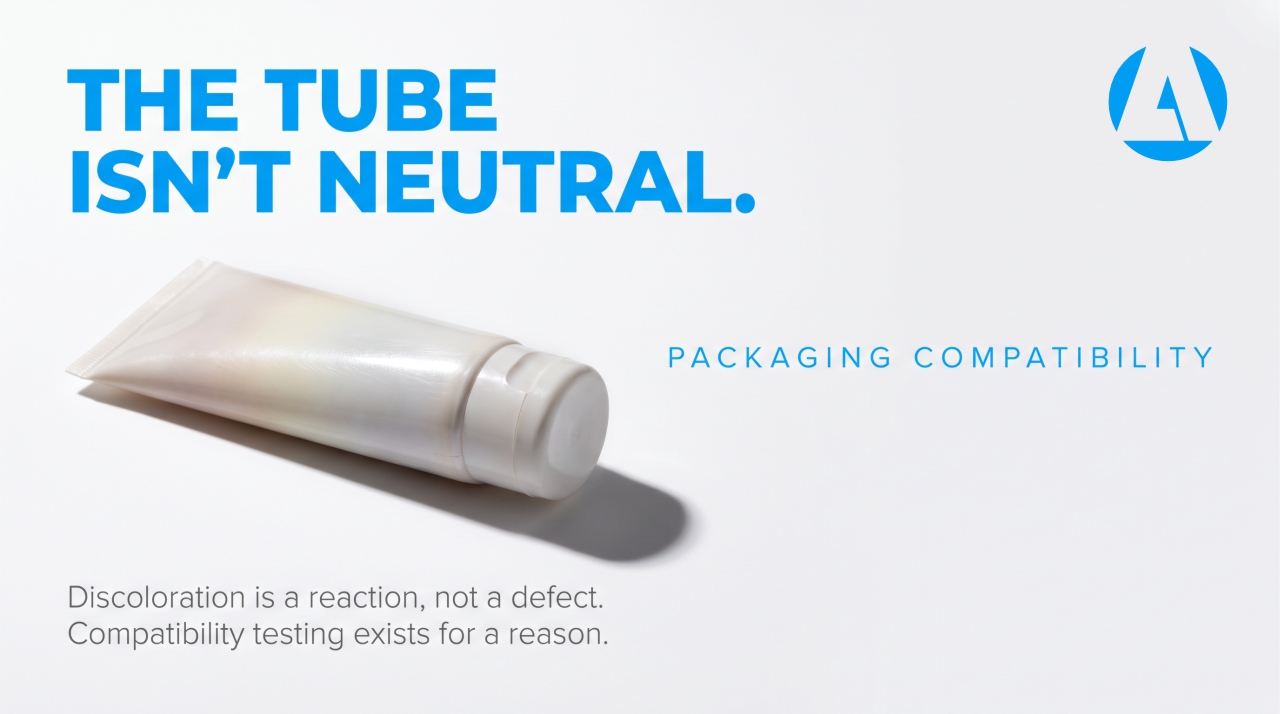
Why Cosmetic Tubes Fade or Discolor: Understanding Packaging-Product Compatibility
Why Some Tubes Change Color From the Inside
Open a drawer of old skincare products and you'll sometimes notice something strange: a tube that's yellowed unevenly, or a cap and body stained a different shade than when it was new. This isn't dirt, and it isn't sun damage. In many cases, it's the product inside reacting with the tube material itself.
This is a well-known challenge in cosmetic manufacturing called packaging-product incompatibility, and it's one of the reasons tube selection is treated as a formulation decision, not just a design one.
Why This Matters
A discolored tube doesn't necessarily mean the product inside has gone bad. But it does raise a red flag for consumers, and understandably so. A tube that looks compromised undermines trust in the product, even if the formula itself is perfectly stable. For brand owners, tube discoloration can mean returned inventory, damaged shelf appeal, and costly rework, all of which are preventable with the right testing upfront.
What Actually Causes the Reaction
Tubes are typically made from plastic layers, sometimes laminated with a thin foil barrier, and this material is not as inert as it appears. Most plastics used in cosmetic tubes, like polyethylene (PE) or polypropylene (PP), have a molecular structure that certain compounds can slowly penetrate or bond with.
A few common mechanisms:
- Pigment or dye migration: Colorants in a formula, especially strong ones like those used in tinted moisturizers or colored serums, can migrate into the tube's plastic wall over months of contact. The plastic effectively absorbs a small amount of color, leaving a stain even after the tube is empty and cleaned.
- Essential oil and fragrance interaction: Certain essential oils and fragrance compounds are known to be aggressive toward plastics. They can cause the tube wall to swell slightly, become brittle, or take on a yellowish tint as the oil's compounds interact with the polymer chains.
- UV and light-triggered reactions: Some tube materials contain stabilizers to resist yellowing from light exposure. If a formula's own ingredients interfere with those stabilizers, or if a lower-grade material is used without adequate UV protection, the tube can discolor faster than expected.
- pH-driven degradation: Products with a very low or high pH, such as strong acid exfoliants, can slowly interact with certain tube resins or the printing/coating layer, leading to fading or a chalky appearance on the surface.
How Manufacturers Prevent This
This is where compatibility testing comes in, a standard part of the product development process. Before a formula is paired with its final tube, samples are filled and stored under accelerated conditions, elevated temperature, humidity, and light exposure, for a set period. Chemists inspect the tube (not just the product) for signs of:
- Color change or staining
- Warping, softening, or brittleness
- Cracking, especially around the seam or cap threading
- Loss of print clarity or label adhesion
If issues appear, the formulation or the tube material is adjusted before moving to full-scale production. This might mean switching to a different resin, adding a foil barrier layer, or reformulating to reduce a reactive ingredient's concentration.
Common Myths
"A discolored tube means the product inside is unsafe."
Not automatically. Tube discoloration is often a packaging issue rather than a product safety issue. That said, if the tube has visibly degraded, cracked, or lost its seal integrity, the product's stability and safety can no longer be assumed.
"All tube plastics behave the same way."
They don't. Different resins have different resistance profiles. A formula that's perfectly stable in one plastic type might stain or degrade a different one entirely. This is precisely why compatibility testing is resin-specific, not a one-size-fits-all check.
"This only happens with cheap tubes."
Cost isn't the only variable. Even premium tubes can react poorly if they weren't tested against that specific formula. Compatibility depends on the chemistry of both sides, the tube material and the product, not just the price point.
Practical Tips for Consumers
- Minor tube fading over many months of use is generally not a safety concern on its own.
- Watch for accompanying signs like cracking, an unusual smell, or texture change in the product, which are more meaningful indicators.
- Store tubes away from direct heat and sunlight, which can accelerate any material interaction.
Practical Notes for Brand Owners
Tube compatibility should never be an afterthought added after a formula is finalized. It's most effective when built into product development from the start, run alongside stability testing, and revisited any time a formula or tube supplier changes. A manufacturing partner with in-house R&D and quality assurance capabilities can identify potential compatibility issues early, before they become a production-scale or customer-facing problem.
Frequently Asked Questions
Q: Why does my skincare tube look stained even after I've emptied and rinsed it?
A: This is often pigment or ingredient migration into the plastic itself, not surface residue. Once compounds penetrate the polymer, the discoloration remains even after cleaning.
Q: Does tube discoloration mean the product has expired?
A: Not necessarily. It's usually a tube-material reaction rather than an indicator of the product's expiration. Check for other signs, like odor or texture change, for a clearer read on the product itself.
Q: How do manufacturers test for tube compatibility?
A: They fill sample tubes with the actual formula and store them under accelerated conditions of heat, humidity, and light, then inspect for staining, warping, or structural changes over a defined testing period.
Q: Can tube discoloration be prevented entirely?
A: It can be significantly reduced through proper resin selection, foil barrier layers, and compatibility testing during development, though some minor color shift over a long product lifespan is common.
Conclusion
A faded or discolored tube isn't always a flaw, it's often a visible reminder that packaging and formulation are chemically connected. Understanding this relationship helps consumers read these signs more accurately and helps brand owners appreciate why tube compatibility testing is a critical, if often invisible, part of product development.
Looking for a manufacturing partner that treats tube compatibility as part of the formulation process, not an afterthought? Acticon Life Sciences offers end-to-end product development and manufacturing solutions focused on quality, compliance, and long-term shelf performance.