
Vitamin E (Tocopherol): The Antioxidant Workhorse Behind Stable, Effective Skincare
Vitamin E rarely gets the spotlight the way Vitamin C or retinol does. It doesn't promise visible transformation, and it's not the kind of ingredient that trends on social media. But walk into almost any formulation lab, and you'll find tocopherol quietly doing two jobs at once: protecting skin and protecting the product itself.
That dual role is exactly why Vitamin E shows up in such a wide range of products, from daily moisturizers to high-performance serums. Understanding how it actually works can help brand owners make smarter formulation decisions and help consumers see past the marketing shorthand.
Why This Ingredient Matters
Skin is under constant low-level assault from UV rays, pollution, and everyday oxidative stress. Left unchecked, these exposures generate free radicals that damage lipids, proteins, and DNA in skin cells, contributing to visible aging over time.
Vitamin E is one of the body's primary fat-soluble antioxidants, meaning it works within the lipid layers of the skin rather than in water-based environments. That makes it particularly well suited to neutralizing free radicals where they tend to do the most damage: in cell membranes and the skin's protective barrier.
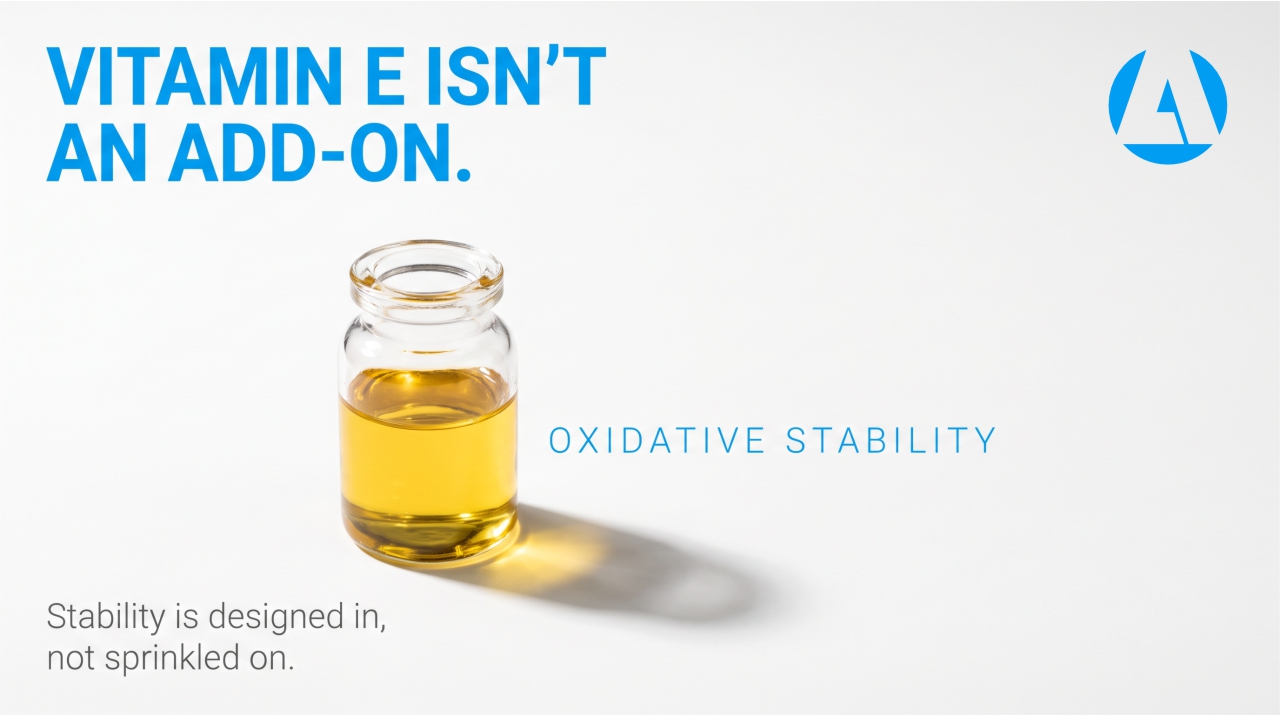
Beyond its role on skin, Vitamin E also protects formulations from oxidizing. Many oils and botanical extracts degrade over time when exposed to air and light. A small percentage of tocopherol added to a formula can meaningfully extend shelf life, which is one reason it appears in so many product ingredient lists even when it isn't the headline active.
The Science Behind It
Vitamin E exists in eight naturally occurring forms, but alpha-tocopherol is the form most active in the human body and most studied for skin benefits. In skincare products, you'll typically see it listed as either:
- Tocopherol — the free, active form
- Tocopheryl acetate — a more stable, esterified form that converts to active tocopherol once absorbed into skin
Tocopheryl acetate is widely used because it resists oxidation better during storage, though it requires enzymatic conversion in the skin to become fully active. Formulators choose between the two depending on the product's stability needs, delivery system, and shelf-life targets.
Vitamin E works by donating an electron to neutralize free radicals, interrupting the chain reaction of oxidative damage before it spreads further into skin cells. This mechanism is well documented in dermatological research, though the degree of visible benefit depends heavily on concentration, formulation, and how well the ingredient is protected from degrading before it reaches the skin.
Benefits
- Antioxidant protection — helps neutralize free radicals from UV and environmental exposure
- Barrier support — contributes to the skin's lipid barrier, which helps limit moisture loss
- Formulation stability — protects oils and co-antioxidants like Vitamin C from oxidizing
- Conditioning texture — adds emollience, which is why it's common in lip balms, body butters, and rich moisturizers
- Synergy with other actives — works particularly well alongside Vitamin C and ferulic acid, where the combination has been studied for enhanced photoprotection compared to either ingredient alone
Limitations
Vitamin E is not a stand-alone solution for sun protection or deep anti-aging correction, and it shouldn't be marketed as one. Its antioxidant contribution is real but modest compared to a properly formulated SPF, and it works best as part of a broader routine rather than in isolation.
Some individuals with acne-prone or sensitive skin report that heavier tocopherol-rich formulas feel occlusive. This isn't universal, but it does mean formulators should consider texture and delivery system carefully depending on the target audience and product category.
Undiluted or very high concentrations of tocopherol can also cause irritation for some users, so working within research-supported ranges is important.
Formulation Considerations
For brands developing products with Vitamin E, a few factors matter more than raw percentage:
- Oxidation protection — tocopherol itself is prone to oxidizing, so it typically needs to be paired with proper packaging (opaque or airless) and sometimes chelators to stay effective through shelf life
- pH and delivery system — the active form's absorption depends on formulation pH and the emulsion or oil system it's carried in
- Pairing with Vitamin C — this is one of the most studied antioxidant combinations in cosmetic chemistry, and the ratio and stabilization method significantly affect performance
- Concentration range — commonly used between 0.5% and 1% in leave-on products, though this varies by product type and regulatory region
This is where experienced formulation and stability testing matter. Two products with identical percentages of Vitamin E on their ingredient list can perform very differently depending on how well the formulation protects that ingredient from breaking down before it ever reaches the consumer.
Common Myths
Myth: More Vitamin E means more benefit. Higher concentrations don't necessarily translate to better results and can increase the risk of irritation or feel heavy on skin. Formulation quality matters more than raw percentage.
Myth: Vitamin E alone can replace sunscreen. Vitamin E offers antioxidant support, not UV filtering. It's a complement to SPF, not a substitute.
Myth: Natural-source Vitamin E always works better than synthetic. Both natural (d-alpha-tocopherol) and synthetic (dl-alpha-tocopherol) forms have documented activity. The meaningful difference is often the delivery system and stability of the finished product, not the raw material source alone.
Practical Tips
- Look for Vitamin E paired with Vitamin C in daytime antioxidant serums for added stability and photoprotection support
- Store Vitamin E-containing products away from direct sunlight and heat to preserve potency
- Pair with a broad-spectrum sunscreen rather than expecting antioxidants to provide UV protection on their own
- Patch test rich, tocopherol-heavy formulas if you have acne-prone skin
Frequently Asked Questions
Is Vitamin E good for all skin types? It's generally well tolerated, though those with oily or acne-prone skin may prefer lighter formulations with lower concentrations to avoid a heavy feel.
Can Vitamin E help with scars or dark spots? Some research suggests antioxidants may support the skin's natural repair processes, but claims of scar removal are not well supported by clinical evidence. Individual results vary.
What's the difference between tocopherol and tocopheryl acetate? Tocopherol is the active form; tocopheryl acetate is a more shelf-stable version that converts to active tocopherol after absorption into skin.
Does Vitamin E expire in skincare products? Yes. Like most antioxidants, it can degrade over time, especially with exposure to air, light, and heat, which is why proper packaging and formulation stability testing matter.
Conclusion
Vitamin E isn't flashy, but it's foundational. Its dual role, protecting skin and protecting the formulation itself, is exactly why it remains a staple across skincare categories decades after its benefits were first studied. For brand owners, the real differentiator isn't whether a product contains tocopherol; it's whether the formulation has been engineered to keep that ingredient stable and effective from production to the final drop.
Formulating a product with Vitamin E or other antioxidants and want to get the stability right from day one? Acticon Life Sciences offers end-to-end product development and manufacturing solutions focused on quality, compliance, and formulation science.