
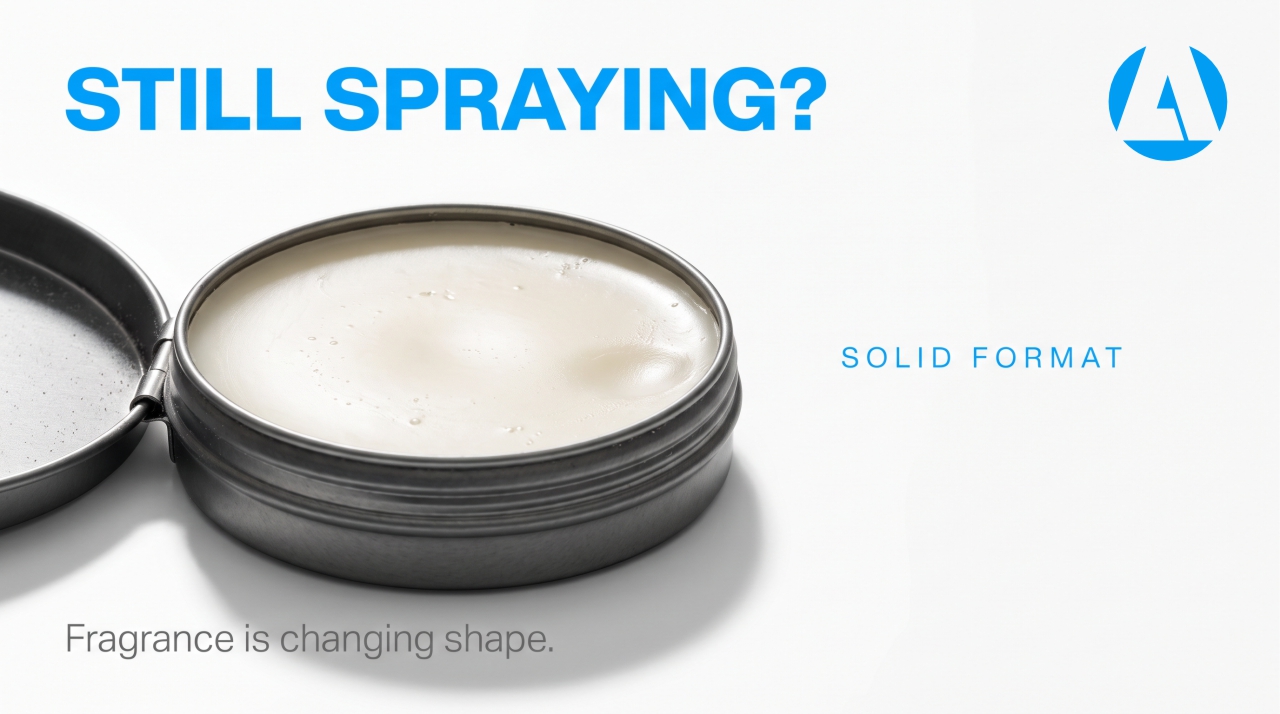
Still spraying? A lot of brands are switching to solid. Here's why fragrance is changing shape.
Fragrance trends move slowly compared to skincare, but one shift has become hard to ignore. More brands, especially newer and independent ones, are adding solid perfumes to their lineup instead of launching another liquid spray. This isn't just a packaging trend. It reflects real changes in how consumers want to buy, carry, and apply fragrance.
For brand owners exploring product development, understanding why this shift is happening can help with better positioning, formulation choices, and manufacturing decisions.
Why This Shift Is Happening Now
Fragrance used to mean one thing: a glass bottle with a spray nozzle. Today, consumers are more experimental with format, more conscious about ingredients, and more interested in products that fit into a minimalist routine. Solid perfumes, typically a blend of waxes, oils, and fragrance compounds set in a balm or stick format, are meeting that demand in ways liquid sprays can't always match.
Below are five reasons this shift is gaining momentum, along with the formulation science behind each one.
1. Longer Wear Without Alcohol
Most liquid perfumes rely on an alcohol base, usually ethanol, to carry and disperse fragrance oils. Alcohol evaporates quickly, which is part of why liquid perfume often needs reapplication throughout the day.
Solid perfumes skip the alcohol carrier entirely. Instead, fragrance oils are suspended in a wax and oil base, often beeswax, jojoba oil, or shea butter. Because there's no alcohol to evaporate, the fragrance releases more slowly as it warms against the skin. This can lead to a longer-lasting scent experience, though wear time still depends on the concentration of fragrance oil used and individual skin chemistry.
For brands, this is a meaningful formulation talking point. It's not about being "better," but about a different release mechanism that suits different consumer needs.
2. Better Suited for Sensitive Skin
Alcohol-based perfumes can be drying or irritating for people with sensitive skin, especially with repeated daily application. Solid perfumes, formulated with emollient bases like oils and butters, tend to be gentler on skin and can even double as a light moisturizer at the point of application.
This matters for brands positioning fragrance as part of a broader self-care or skincare-adjacent routine, rather than a purely cosmetic add-on. When formulated carefully, with attention to comedogenicity and compatibility, solid perfume can appeal to a wider range of skin types than traditional sprays.
3. Travel-Friendly and Leak-Proof
Liquid perfume bottles are fragile, prone to breakage, and subject to liquid restrictions on flights. Solid perfumes come in compact tins, tubes, or stick containers that don't spill, don't count against liquid limits in the same way, and are easier to toss into a bag or pocket.
This practicality has made solid perfume a favorite among frequent travelers and younger consumers who prioritize convenience. From a brand development perspective, this also opens up gifting and travel-kit product lines that liquid formats can't easily support.
4. Lower Environmental Footprint in Packaging
Sustainability continues to shape purchasing decisions, and packaging is often the first thing consumers notice. Solid perfumes are typically packaged in small metal tins or recyclable containers, using far less material than a glass bottle, spray pump, and outer carton.
Some brands are also exploring refillable solid perfume formats, which further reduces packaging waste over the product's lifecycle. For brand owners building a sustainability narrative, solid perfume can be a natural fit, provided the formulation and sourcing genuinely support that positioning rather than just the packaging.
5. A Different Sensory and Application Experience
Applying solid perfume is tactile. It involves dabbing the balm onto pulse points rather than spraying into the air. Many consumers find this application style more intimate and controlled, especially compared to the sometimes overwhelming initial burst of a liquid spray.
This format also allows for creative product design, layered scent tins, mixable fragrance balms, or scent-stacking kits that liquid perfume doesn't lend itself to as easily. Brands looking to differentiate in a crowded fragrance market are using this flexibility to build more experiential product lines.
Formulation Considerations Brands Should Know
Solid perfume isn't simply liquid perfume with the alcohol removed. It requires its own formulation approach:
- Wax-to-oil ratio determines texture, glide, and melt point. Too much wax creates a hard, difficult-to-apply balm; too much oil results in a soft product that may not hold shape in warm climates.
- Fragrance oil concentration needs adjustment since there's no alcohol to help fragrance oils disperse and volatize the way they do in sprays.
- Stability testing is essential, particularly around temperature fluctuations during shipping and storage, since solid perfumes can soften or melt if not formulated with the right melting point range.
- Packaging compatibility matters too. Metal tins, plastic sticks, and glass jars all interact differently with wax-based formulas over time.
This is where working with an experienced contract manufacturer makes a difference. At Acticon Life Sciences, formulation teams evaluate base composition, fragrance load, and stability parameters together, rather than treating them as separate decisions, so the final product performs consistently from batch to batch.
Common Myths About Solid Perfume
Myth: Solid perfume doesn't project as much as liquid spray. Projection depends on fragrance oil concentration and skin chemistry, not just format. A well-formulated solid perfume with adequate fragrance load can perform comparably to a lighter liquid spray.
Myth: Solid perfume is only for niche or indie brands. While solid perfume has strong roots in indie beauty, established fragrance houses have increasingly added solid formats to their lines, recognizing the format's practicality and appeal.
Myth: All solid perfumes are natural or clean. Format doesn't determine ingredient philosophy. A solid perfume can be formulated with synthetic fragrance compounds just as easily as a liquid one. Brands should be clear and accurate about their ingredient sourcing regardless of format.
Practical Tips for Brands Considering Solid Perfume
- Start with a small, well-curated scent range rather than launching too many variants at once.
- Test stability across a realistic temperature range, especially if targeting warmer climates or shipping without climate control.
- Consider dual-purpose positioning, such as a fragrance balm that also nourishes skin, to appeal to consumers who want multifunctional products.
- Work closely with your manufacturing partner on packaging trials, since wax-based formulas behave differently across container types.
Frequently Asked Questions
Is solid perfume as long-lasting as liquid perfume? It can be, depending on fragrance oil concentration and formulation. Because solid perfume lacks an alcohol carrier, scent release tends to be slower and more gradual, which some consumers experience as longer wear.
Can solid perfume be used on sensitive skin? Many solid perfumes are gentler than alcohol-based sprays since they use oil and wax bases. However, individual sensitivity varies, and patch testing is recommended for any new fragrance product.
Is solid perfume more expensive to manufacture than liquid perfume? Costs vary based on ingredients, packaging, and batch size. Solid perfume production involves different equipment and process considerations, so working with a manufacturer experienced in both formats helps brands plan accurately.
Can solid perfume be private labeled? Yes. Solid perfume can be developed as a custom formulation or private labeled from an existing base, depending on a brand's budget, timeline, and MOQ requirements.
Conclusion
The shift toward solid perfume reflects broader changes in how consumers think about fragrance: less about a single dramatic spray, more about a considered, skin-friendly, travel-ready ritual. For brands, this format offers real opportunities to differentiate, but success depends on getting the formulation science right, from wax ratios to fragrance load to packaging stability.
Exploring solid perfume or other fragrance formats for your brand? Acticon Life Sciences offers formulation development and contract manufacturing support to help bring well-tested, stable products to market.