
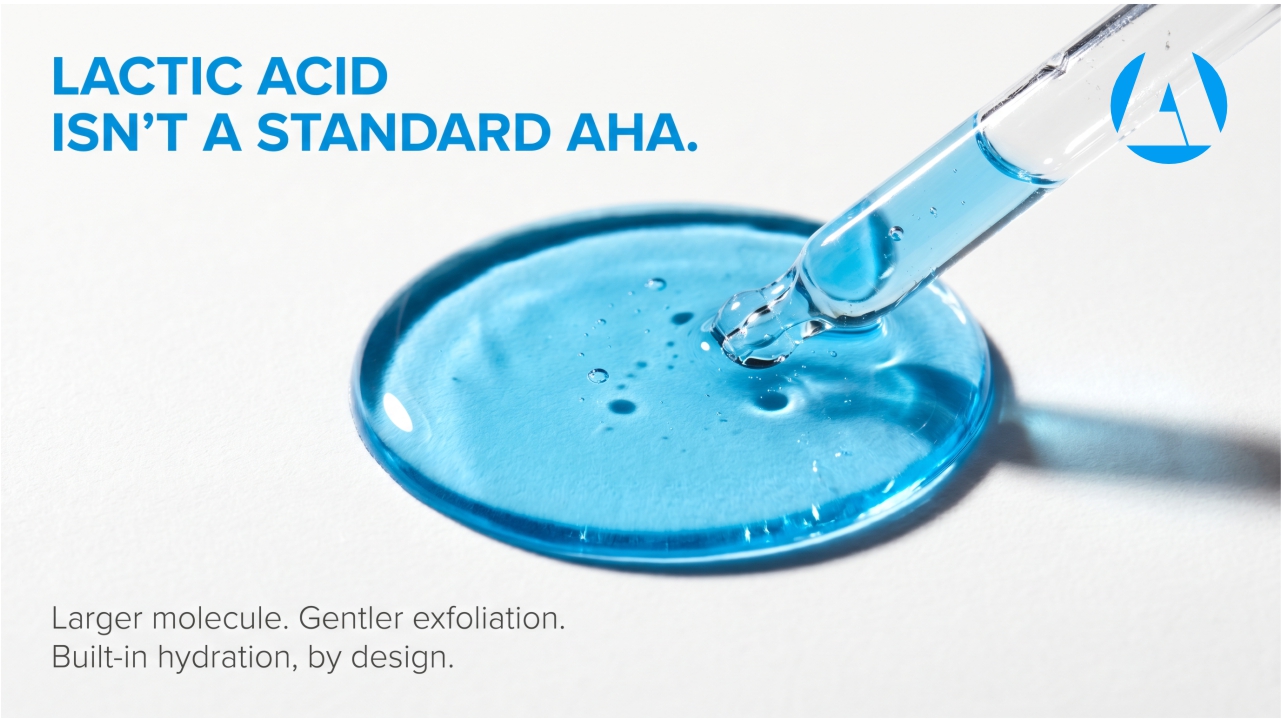
Lactic Acid: The Gentlest AHA and Why It Beats Glycolic Acid for Beginners
Chemical exfoliants have become a staple in modern skincare routines, but not all acids behave the same way. Glycolic acid often gets top billing as the "gold standard" AHA, yet it isn't always the right entry point for every skin type. Lactic acid, a close relative in the same acid family, offers a gentler alternative that still delivers visible results.
For brand owners developing exfoliating products, and for consumers trying to figure out where to start, understanding what sets lactic acid apart matters. This article explains the science behind lactic acid, how it compares to glycolic acid, and what makes it a smart formulation choice.
Why the Topic Matters
Exfoliation is one of the most requested benefits in skincare, but it's also one of the most misunderstood. Many people jump straight into higher-strength acids and end up with irritation, redness, or a compromised skin barrier. Choosing an AHA with a gentler onboarding curve can mean the difference between a routine someone sticks with and one they abandon after a bad reaction.
For brands, this also has product development implications. An ingredient with a lower irritation profile can widen a formula's addressable audience, particularly for lines targeting sensitive or first-time exfoliation users.
What Is Lactic Acid?
Lactic acid is an alpha hydroxy acid naturally found in fermented milk, though most cosmetic-grade lactic acid used today is produced through bacterial fermentation of plant sugars rather than sourced from dairy. It belongs to the same AHA family as glycolic acid, which means it works by loosening the bonds between dead skin cells on the skin's outer layer, encouraging them to shed more evenly.
What separates lactic acid from other AHAs is its dual identity. It exfoliates, but it also functions as a humectant, meaning it attracts and holds water in the skin. This combination of resurfacing and hydrating action is part of why it's often positioned as a gentler option.
Scientific Explanation: How Lactic Acid Works
The key difference between lactic acid and glycolic acid comes down to molecular size. Glycolic acid has the smallest molecular weight among common AHAs, which allows it to penetrate the skin quickly and deeply. Lactic acid's molecule is larger, so it penetrates more slowly and doesn't reach as far into the epidermis in the same timeframe.
This slower penetration is not a weakness. It's the reason lactic acid tends to produce less immediate irritation, stinging, and redness, particularly at comparable concentrations. The exfoliation still happens, but the process is more gradual and more forgiving for skin that hasn't built up tolerance to acids.
Lactic acid also plays a role in supporting the skin's natural moisturizing factor (NMF), a group of humectant compounds that help the skin retain water. Because lactic acid is chemically similar to a component of the NMF, it integrates well into the skin's hydration system rather than working against it.
Benefits of Lactic Acid
- Gentler exfoliation: Lower likelihood of irritation compared to smaller-molecule AHAs, making it suitable for sensitive or reactive skin types.
- Hydration support: Functions as a humectant, which can help offset the dryness sometimes associated with exfoliating acids.
- Improved texture and tone: Regular use may help improve the appearance of rough texture, dullness, and uneven tone over time.
- Beginner-friendly entry point: A practical first AHA for people who haven't used chemical exfoliants before.
- Versatile formulation partner: Works well in serums, toners, and moisturizers, and can be combined with humectants like hyaluronic acid for added hydration.
Results depend on concentration, formulation, and consistency of use. Individual results may vary, and lactic acid should still be introduced gradually.
Common Myths About Lactic Acid
Myth: Lactic acid doesn't do anything because it's "too weak." Lactic acid is milder in sensation, not necessarily in effect. At the right concentration and pH, it delivers measurable exfoliation; it simply does so with less immediate irritation.
Myth: All AHAs cause the same level of sun sensitivity. While all AHAs can increase photosensitivity to some degree, the difference in penetration depth means reactions can vary by ingredient and concentration. Daily sunscreen use is recommended with any AHA regardless.
Myth: You can layer lactic acid with every active without issue. Combining lactic acid with other actives, particularly retinoids or additional exfoliants, can increase the risk of irritation. Formulation and usage frequency both matter.
Myth: Higher percentage always means better results. Efficacy depends on formulation pH, delivery system, and skin tolerance, not concentration alone. A well-formulated lower percentage can outperform a poorly buffered high percentage product.
Practical Tips for Use
- Start with lower concentrations (around 5–10%) and limited frequency, such as two to three times per week, before increasing.
- Always pair AHA use with daily sunscreen, since exfoliated skin can be more vulnerable to UV exposure.
- Avoid combining lactic acid with strong exfoliants or retinoids on the same night, especially when starting out.
- Look for formulations with a supportive pH range (typically 3.5–4.5) and complementary hydrating ingredients.
- Patch test new products, particularly for those with a history of sensitive or reactive skin.
Formulation Considerations for Brand Owners
Lactic acid's performance in a finished product depends heavily on formulation science, not just the raw percentage listed on packaging. pH is one of the most critical factors: too high, and the acid becomes largely ineffective; too low, and irritation risk increases. Stability also matters, as lactic acid formulations need appropriate buffering and packaging to maintain their effective pH over shelf life.
Compatibility with supporting ingredients is another consideration. Pairing lactic acid with humectants like glycerin or hyaluronic acid can help balance the exfoliating action with hydration, creating a more comfortable user experience. Packaging choice, particularly opaque or airless systems, can also help protect formula integrity over time.
Frequently Asked Questions
Is lactic acid better than glycolic acid? Neither is universally "better." Lactic acid tends to suit sensitive or beginner skin due to its larger molecule size and gentler penetration, while glycolic acid may appeal to those seeking more intensive exfoliation and who have built up tolerance.
Can lactic acid help with hyperpigmentation? Lactic acid may help improve the appearance of surface-level dullness and uneven tone with consistent use, though results vary and it's not a treatment for underlying pigmentation conditions.
Is lactic acid safe for daily use? This depends on concentration and individual skin tolerance. Many formulations are designed for a few times per week rather than daily use, especially when starting out.
Can lactic acid be used with vitamin C or niacinamide? Lactic acid can generally be combined with niacinamide. Combining with vitamin C requires more care around pH compatibility and is often better suited to separate routines (morning versus evening) depending on the specific formulation.
Who should avoid lactic acid? Those with active skin barrier damage, eczema flare-ups, or known sensitivities to AHAs should consult a dermatologist before introducing lactic acid into a routine.
Conclusion
Lactic acid occupies a useful middle ground in skincare formulation: effective enough to deliver visible exfoliation and texture improvement, yet gentle enough to serve as a reasonable starting point for those new to chemical acids. Its dual role as an exfoliant and humectant makes it a versatile ingredient for a wide range of skin types and formulation goals, provided the finished product is properly formulated and buffered.
Looking for a reliable manufacturing partner to formulate lactic acid-based exfoliants or other actives-driven skincare products? Acticon Life Sciences offers end-to-end product development and manufacturing solutions focused on quality, stability, and regulatory compliance.