
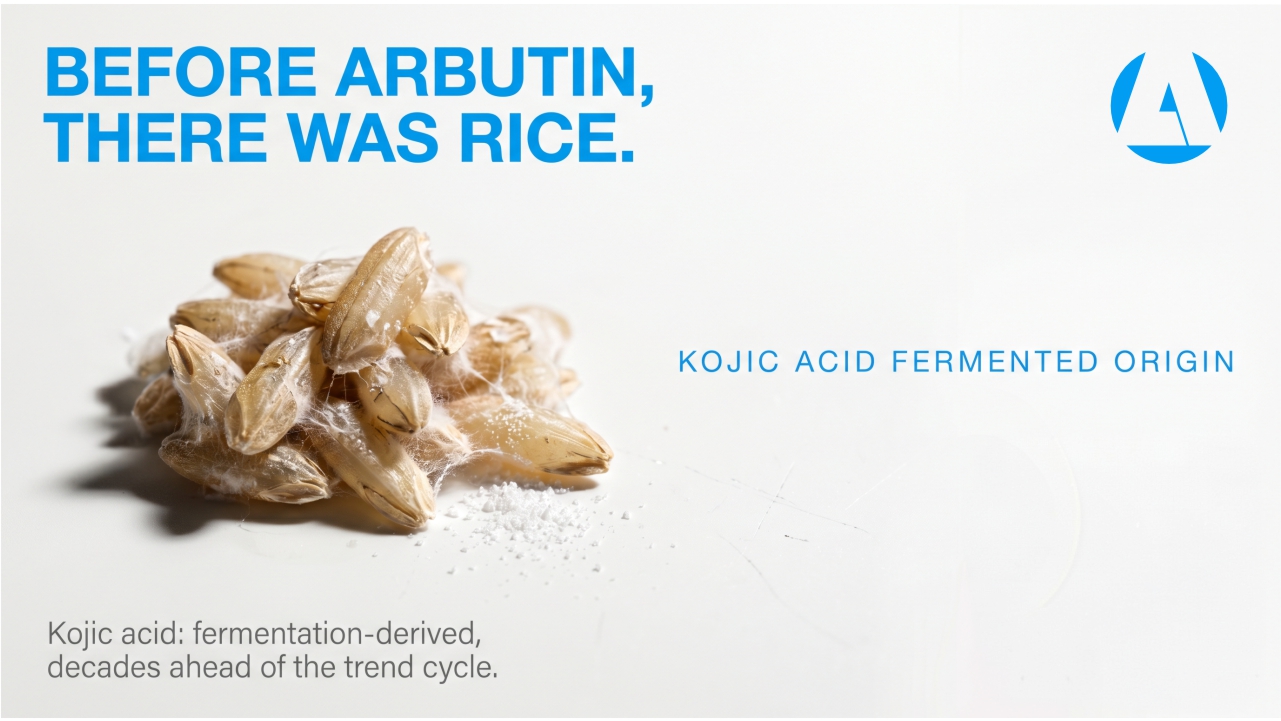
Kojic Acid: The Original Skin Brightener Before Alpha Arbutin
Long before alpha arbutin became a skincare shelf staple, kojic acid was one of the first brightening ingredients to gain real scientific traction. It's still widely used today, from professional dermatology clinics to everyday serums. But kojic acid has a reputation for being finicky — it can be unstable, and its formulation matters as much as the ingredient itself.
This article breaks down what kojic acid actually is, how it works, where it fits alongside other brightening actives, and what brands should know if they're formulating with it.
Why This Topic Matters
Uneven skin tone, sun spots, and post-acne marks are among the most common skincare concerns worldwide. Kojic acid is often marketed as a solution, but consumers and even some brand owners don't always understand how it works or why formulation quality determines whether it delivers results at all. Getting the science right matters — both for consumer trust and for regulatory accuracy.
What Is Kojic Acid?
Kojic acid is a naturally occurring compound derived as a byproduct of fermenting rice, sake, or certain fungi species such as Aspergillus oryzae. It was discovered in Japan in the 1980s and has since become one of the most studied skin-brightening ingredients in cosmetic chemistry.
Chemically, it belongs to a class of compounds that interfere with melanin synthesis, which is why it's grouped with other "tyrosinase inhibitors" like alpha arbutin, azelaic acid, and tranexamic acid.
The Science: How Kojic Acid Works
Skin color is largely determined by melanin, a pigment produced by cells called melanocytes. The enzyme tyrosinase plays a central role in this process — it converts an amino acid called tyrosine into melanin through a multi-step reaction.
Kojic acid works by binding to copper ions at the active site of tyrosinase, which reduces the enzyme's ability to function. With less active tyrosinase, melanin production slows down, and over time, this can help fade dark spots and even out skin tone.
This mechanism is well documented in dermatological research, and it's why kojic acid is often included in formulations targeting melasma, post-inflammatory hyperpigmentation, and sun-induced dark spots.
Benefits of Kojic Acid
When formulated correctly, kojic acid may help with:
- Supporting a more even, brighter-looking skin tone
- Reducing the appearance of sun spots and dark marks over time
- Complementing other actives like vitamin C, niacinamide, or alpha arbutin in a multi-ingredient brightening routine
- Offering a plant- and fermentation-derived alternative for brands positioning around naturally sourced actives
It's worth noting that individual results vary depending on concentration, formulation stability, skin type, and consistency of use.
Limitations and Stability Challenges
Kojic acid has one well-known formulation challenge: it's chemically unstable. When exposed to air, light, or heat over time, kojic acid can oxidize and turn brown, which reduces its effectiveness and can also cause discoloration in the final product.
This is why formulators often:
- Use kojic dipalmitate, a more stable derivative, in place of pure kojic acid
- Pair it with antioxidants like vitamin E to slow oxidation
- Package it in opaque, airtight containers to limit light and air exposure
- Control pH carefully, since kojic acid performs best in a mildly acidic environment
Some users also report mild skin sensitivity with kojic acid, particularly at higher concentrations, so patch testing and gradual introduction are generally recommended.
Kojic Acid vs. Alpha Arbutin: What's the Difference?
Both ingredients target tyrosinase, but they work through slightly different mechanisms and have different tolerability profiles.
- Kojic acid binds directly to the enzyme's active site and tends to be more potent, but also more prone to instability and mild irritation in some users.
- Alpha arbutin is metabolized more slowly into hydroquinone-like compounds within the skin, which generally makes it gentler and more stable, though it may act more gradually.
Many modern formulations combine both — or pair kojic acid with stabilizing and soothing ingredients — to balance efficacy with tolerability.
Compatibility With Other Ingredients
Kojic acid generally works well alongside:
- Vitamin C (with careful pH balancing, since both are somewhat pH-sensitive)
- Niacinamide, which can support barrier function while kojic acid targets pigmentation
- Sunscreen, which is essential — brightening ingredients are far less effective without daily UV protection, since sun exposure directly stimulates melanin production
Formulators should avoid combining high concentrations of multiple exfoliating or brightening acids without proper buffering, as this can increase the risk of irritation.
Common Myths About Kojic Acid
Myth: Kojic acid bleaches the skin. Kojic acid does not bleach skin in the way household bleach works. It reduces new melanin production; it doesn't strip existing pigment from skin cells.
Myth: More kojic acid means faster results. Higher concentrations don't necessarily mean better outcomes — they often increase the risk of irritation without proportionally improving results. Formulation quality and consistency of use matter more than concentration alone.
Myth: Kojic acid works instantly. Melanin turnover is a gradual biological process. Visible improvement in tone typically takes several weeks of consistent use, and results vary by individual.
Practical Tips for Consumers
- Introduce kojic acid gradually, starting with lower frequency of use
- Always pair with a broad-spectrum sunscreen during the day
- Store products away from direct sunlight and heat to preserve stability
- Patch test new products, especially if you have sensitive skin
- Be patient — brightening ingredients generally require consistent use over 8–12 weeks to show visible change
A Note for Brands Formulating With Kojic Acid
For skincare brands considering kojic acid in a product line, formulation expertise is critical. Stability testing, appropriate derivative selection (such as kojic dipalmitate), packaging choices, and pH optimization all directly affect how well the final product performs on skin — and how long it stays effective on the shelf.
Frequently Asked Questions
Is kojic acid safe for daily use? Many formulations are designed for daily use, but this depends on concentration and individual skin sensitivity. Starting with a lower frequency and monitoring skin response is generally recommended.
Can kojic acid be used with retinol? Yes, though it's usually advised to introduce them at different times of day or on alternating days to reduce the risk of irritation, particularly for sensitive skin types.
Does kojic acid help with melasma? Research suggests kojic acid may help support a more even tone in cases of melasma and post-inflammatory hyperpigmentation, though it's typically most effective as part of a broader routine that includes sun protection and, where appropriate, professional guidance.
Why does kojic acid sometimes turn brown in a product? This is a sign of oxidation, which reduces the ingredient's effectiveness. Proper packaging, antioxidant pairing, and stable derivatives like kojic dipalmitate help minimize this issue.
Conclusion
Kojic acid remains one of the most well-researched skin-brightening ingredients available, and its fermentation-derived origin gives it a natural appeal that continues to resonate with consumers. But its effectiveness depends heavily on how it's formulated — stability, concentration, and supporting ingredients all play a role in whether a product actually delivers on its promise.
Formulating a brightening product with kojic acid or other actives requires careful attention to stability, pH, and packaging compatibility. Acticon Life Sciences supports skincare brands with formulation development and manufacturing solutions built around scientific accuracy and quality compliance, from concept through production.