
Is Layering More Skincare Products Always Better for Your Skin?
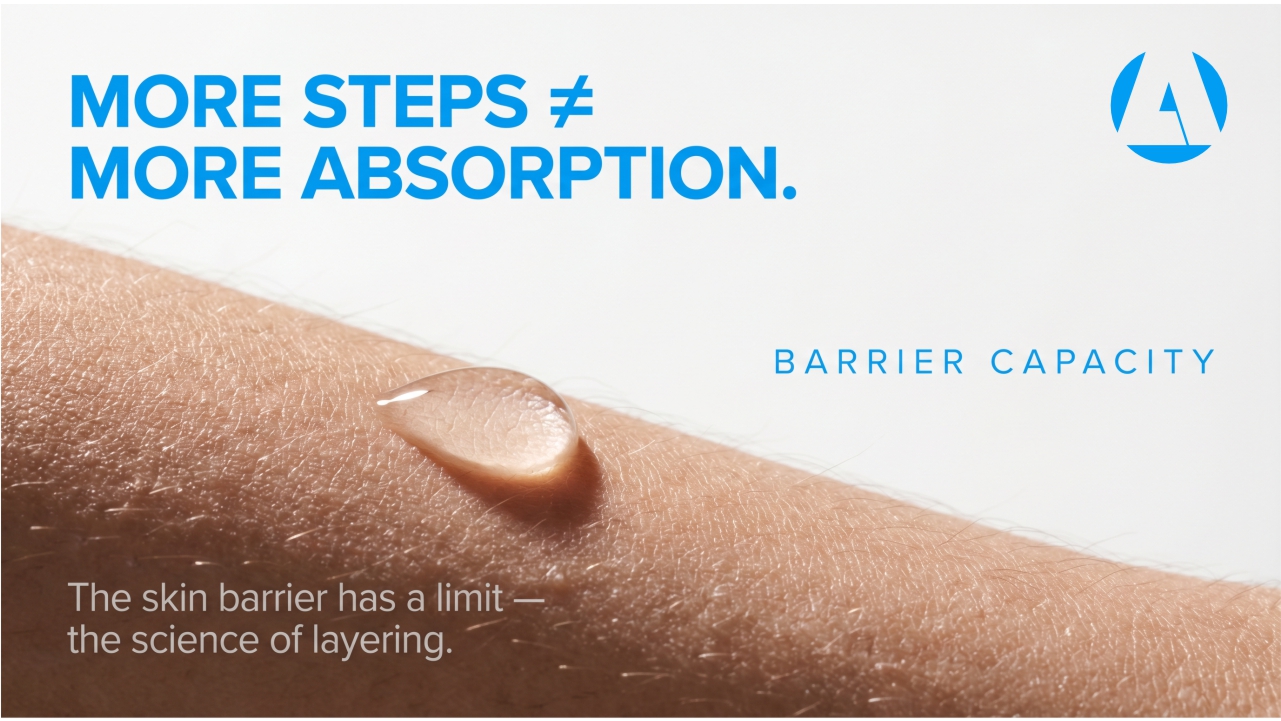
Walk into any skincare aisle or scroll through social media, and you'll likely see routines with ten, twelve, sometimes fifteen steps. Cleansers, essences, serums, ampoules, moisturizers, and oils, all stacked in a specific order. It's easy to assume that more products mean more results.
But that's not how skin works.
Your skin has a limit to how much it can absorb, tolerate, and process at once. Understanding that limit is the difference between a routine that supports your skin and one that quietly works against it.
Why the "More Is Better" Idea Took Hold
The appeal of multi-step routines makes sense. Each product promises something specific: hydration, brightening, firmness, glow. Layering feels like a way to address every concern at once.
Social media has amplified this. Elaborate routines are visually satisfying and easy to share, which has made large product counts feel like a marker of skincare seriousness. But visibility isn't the same as effectiveness.
In reality, skin doesn't respond to volume. It responds to formulation quality, ingredient compatibility, and consistency.
What Happens When You Layer Too Much
Skin has a protective outer layer called the stratum corneum, along with a lipid barrier made of ceramides, cholesterol, and fatty acids. This barrier controls what gets in and keeps moisture from escaping.
When too many products are applied in a short window, a few things can happen:
- Barrier disruption. Repeated exposure to actives, especially exfoliating acids, retinoids, or high concentrations of vitamin C, can strip the barrier faster than it can repair itself, leading to redness, sensitivity, or a tight, dry feeling.
- Reduced absorption. Skin can only absorb so much in one application. Layering multiple serums back-to-back often means the later ones sit on top rather than penetrating.
- Ingredient conflicts. Some actives don't perform well together. Combining certain acids with retinoids, for example, can increase irritation without adding benefit. Order and pH also affect how well an ingredient can work.
- Occlusion issues. Heavy layering, especially with oils or rich creams applied too early, can trap other products underneath instead of letting them absorb.
None of this means every multi-step routine is harmful. It means more steps don't guarantee better outcomes, and for some skin types, they increase risk.
The Case for Formulation Over Quantity
A single, well-formulated product often does more than three underperforming ones. This comes down to how a product is built, not just what's listed on the label.
Stability, pH balance, delivery systems, and supporting ingredients all determine whether an active ingredient actually reaches the skin in a usable form. A serum with 20% vitamin C that's poorly stabilized may degrade before it does anything useful. A moisturizer with a thoughtfully designed ceramide complex can do more for barrier repair than five separate hydrating steps.
This is where formulation science matters more than marketing claims. It's also why contract manufacturers who invest in R&D, stability testing, and compatibility studies tend to produce products that perform more reliably, layered or not.
Practical Tips for Smarter Layering
If you want to build a routine that works with your skin rather than overwhelming it, a few principles help:
- Start minimal. A cleanser, one targeted treatment, a moisturizer, and sunscreen cover most daily needs. Additional steps can be added gradually.
- Layer thinnest to thickest. Watery formulas go on before heavier creams or oils, since this order supports better absorption.
- Give actives room to work. Applying too many active ingredients in one sitting doesn't multiply results. Alternating actives across morning and evening, or across different days, often reduces irritation.
- Watch for signs of overload. Redness, stinging, breakouts, or a compromised texture can indicate the skin is reacting to too much, too fast.
- Introduce new products one at a time. This makes it easier to identify what's working and what isn't.
Individual results may vary depending on skin type, climate, and the specific formulations used, so a routine that works well for one person may need adjustment for another.
Common Myths About Layering
Myth: More products always mean faster results. Results depend on formulation and consistency, not the number of steps. Overloading skin can slow progress by triggering irritation.
Myth: If a product doesn't feel like it's working, adding another will help. Often, the issue is formulation quality or incompatibility, not lack of volume.
Myth: All skincare products can be layered in any order. Order affects absorption and stability. Poor sequencing can reduce how well products perform.
Why This Matters for Skincare Brands
For brands developing new products, this is a reminder that consumers are becoming more aware of formulation quality over routine length. A well-formulated multi-tasking product, one that combines hydration, barrier support, and a targeted active in a stable, compatible base, can offer real value without adding complexity to a routine.
This is where working with an experienced contract manufacturer matters. Formulation teams that understand ingredient compatibility, stability testing, and delivery systems can help brands create products that perform well on their own, without requiring consumers to layer excessively to see results.
Frequently Asked Questions
Is it bad to use too many skincare products at once? It can be, depending on the ingredients involved. Overlapping actives or heavy layering may irritate the skin or reduce how well individual products work.
How many skincare steps do I actually need? Most people can maintain healthy skin with four core steps: cleanser, treatment, moisturizer, and sunscreen. Additional steps can be added based on specific concerns.
Can layering too many products cause breakouts? Yes, in some cases. Heavy layering, particularly with occlusive or comedogenic ingredients, can clog pores or trap other products beneath the skin's surface.
Does product order matter when layering? Yes. Applying products from thinnest to thickest consistency generally supports better absorption and reduces the chance of one product blocking another.
Should I introduce new products one at a time? This is generally recommended. It makes it easier to identify which product is responsible for any reaction or improvement.
Conclusion
A longer routine isn't automatically a better one. Skin benefits more from thoughtfully formulated products used consistently than from a long list of steps layered on top of each other. Understanding your skin's limits, and choosing products built on sound formulation science, tends to deliver more reliable results than chasing volume.
Looking for a formulation partner who prioritizes quality over quantity? Acticon Life Sciences develops skincare and cosmetic products built on stability testing, ingredient compatibility, and evidence-based formulation science, helping brands create products that perform well without overcomplicating a consumer's routine.