
How to Read a Manufacturing Quote: A Brand Owner's Guide to Hidden Costs
Getting a manufacturing quote for the first time can feel like reading a document in a language you weren't taught. Numbers are grouped together, some line items are vague, and it's not always clear what happens if your order size changes. For a brand owner comparing two or three manufacturers, this can make an already difficult decision even harder.
The good news is that most quotes follow a similar underlying logic once you know what to look for. Understanding the structure behind the numbers helps you compare offers accurately and avoid costs that show up later in the process.
Why This Matters for Brand Owners
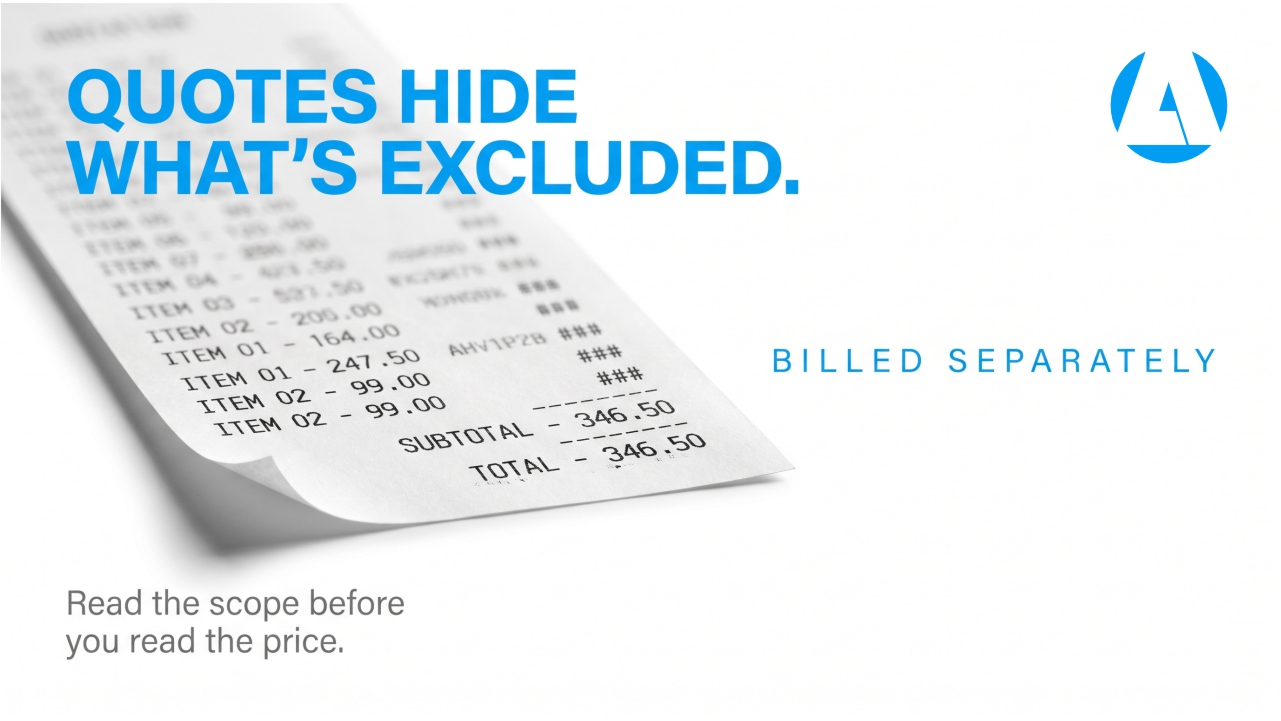
A quote is more than a price tag. It's a preview of how a manufacturer works, what they consider standard, and what they treat as an add-on. Two quotes with the same bottom-line number can represent very different scopes of work.
Brand owners who don't ask enough questions upfront sometimes discover mid-production that packaging testing, extra label proofs, or expedited shipping were never included. These aren't hidden in a dishonest way — most manufacturers separate them because not every brand needs every service. But if you don't know to ask, you may assume they're bundled in.
What a Standard Quote Usually Includes
Most cosmetic and skincare manufacturing quotes are built around a few core components:
- Formulation cost — the raw materials and base formula, priced per unit or per batch
- Filling and labor — the cost of actually producing and filling the product
- Primary packaging — bottles, jars, tubes, or pumps, and their per-unit cost at your order quantity
- Basic quality control — routine checks during and after production, such as pH, viscosity, and fill weight
- Standard documentation — a Certificate of Analysis (COA) for the finished batch
This is the foundation. Depending on the manufacturer, some or all of the items below may sit outside this base price.
What Often Gets Left Out
Here's where brand owners are most likely to get surprised, and where asking direct questions upfront pays off.
Tooling and mold costs. If you're using custom packaging — a unique cap shape, an unusual bottle silhouette — there's often a one-time tooling fee separate from the per-unit packaging cost. This can range from a few hundred to several thousand dollars depending on complexity, and it's rarely folded into the per-unit price.
Stability and compatibility testing. Basic QC checks confirm a batch meets spec on the day it's made. Stability testing — checking how a formula holds up over weeks or months in different conditions — is a separate, more involved process and is often quoted independently, especially for new formulations.
Artwork and label revisions. Most manufacturers include a set number of proof rounds. Beyond that, revision fees can apply.
Freight and duties. Especially for international shipments, freight, customs clearance, and import duties are almost never included in the base manufacturing quote.
Regulatory filing support. If you need help with product registration, ingredient documentation for a specific market, or MoCRA-related filings in the US, this is typically a distinct service line.
Minimum order quantity (MOQ) tiers. Pricing is usually tied to volume. A quote at 5,000 units may look very different per-unit than the same formula at 1,000 units. If you're not sure why two manufacturers quoted different numbers, check whether they assumed the same order size.
Practical Tips for Comparing Quotes
When you're evaluating more than one manufacturing partner, a like-for-like comparison matters more than the headline number. A few practices help:
- Ask for an itemized quote, not a single lump sum. This makes it much easier to see where the actual differences are.
- Confirm the order quantity the quote is based on. Per-unit costs shift significantly with volume, so compare at the same MOQ where possible.
- Ask what stability testing is included, if any, particularly for actives like retinoids, vitamin C derivatives, or exfoliating acids that are sensitive to formulation stability.
- Clarify packaging ownership. If tooling is custom-made for your brand, ask whether you retain rights to the mold if you switch manufacturers later.
- Request a timeline alongside the price. Lead time can vary by weeks depending on packaging availability and formulation complexity, and a lower price with a longer timeline may not actually be the better deal for your launch schedule.
Common Misunderstandings
One frequent assumption is that a lower quote always means a better deal. In practice, a lower number sometimes reflects a narrower scope — fewer QC checks, no stability testing, or a smaller included revision allowance — rather than genuine cost efficiency.
Another misconception is that MOQs are arbitrary. They typically reflect the minimum batch size a manufacturer needs to run efficiently given their equipment and raw material purchasing, not a negotiating tactic. Manufacturers who offer very low MOQs may be using smaller-batch equipment, which can affect unit economics differently than larger-scale production.
It's also worth remembering that formulation cost isn't the only variable. Packaging complexity, testing depth, and documentation requirements often account for more of the price difference between quotes than the formula itself.
Frequently Asked Questions
Q: Why do two manufacturers quote such different prices for what seems like the same product? A: Differences usually come from scope, not just cost structure — one quote may include stability testing or extra QC checks that another doesn't. Comparing itemized breakdowns, not just totals, clarifies this.
Q: Is a tooling fee a one-time cost? A: Generally, yes. Tooling for custom packaging is typically a one-time investment, though reorders using the same mold usually don't incur it again.
Q: Should I expect regulatory filing costs to be included automatically? A: Not usually. Regulatory support, especially for specific markets like the US or EU, is often quoted as a separate service depending on the manufacturer.
Q: How can I avoid unexpected costs mid-production? A: Requesting a fully itemized quote and asking directly about testing, tooling, freight, and revision policies before signing off is the most reliable way to avoid surprises later.
Conclusion
A manufacturing quote tells you more about a partner than just the price — it shows how transparently they work and what they consider essential versus optional. Taking the time to ask for an itemized breakdown, understand what's excluded, and compare quotes at the same order volume puts you in a much stronger position to choose the right partner for your brand.
Looking for a manufacturing partner who provides transparent, itemized quotes for skincare, cosmetics, pharmaceuticals, or nutraceuticals? Acticon Life Sciences offers end-to-end product development and manufacturing solutions built around clarity, compliance, and quality.