
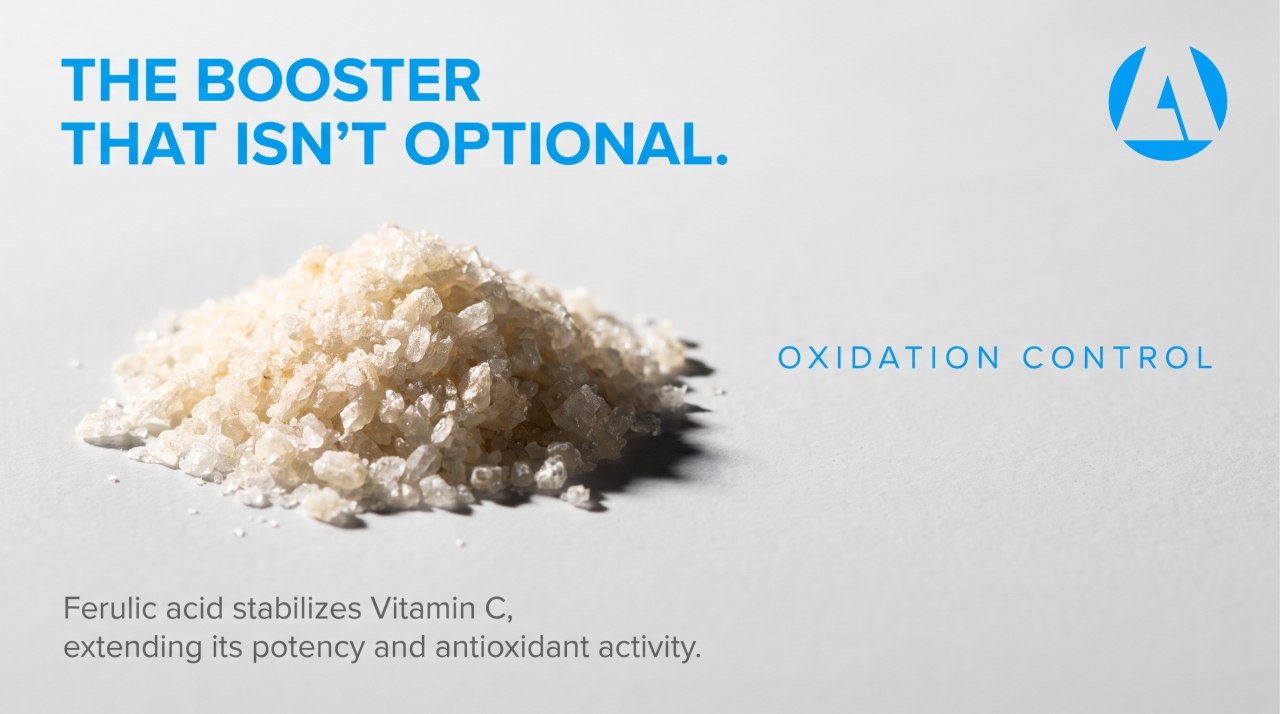
Ferulic Acid: The Antioxidant That Makes Your Vitamin C Serum Work Harder
If you've ever checked the ingredient list on a Vitamin C serum, there's a good chance you've spotted ferulic acid sitting quietly near the top. It rarely gets its own spotlight the way Vitamin C or retinol does, yet formulators reach for it again and again. Understanding why says a lot about how good skincare actually works — not through single "hero" ingredients, but through smart combinations.
What Is Ferulic Acid?
Ferulic acid is a plant-based antioxidant compound found naturally in the cell walls of rice bran, oats, wheat bran, and the seeds of many fruits and vegetables, including apples and oranges. It belongs to a class of compounds called hydroxycinnamic acids, which plants produce partly as their own defense system against environmental stress, including UV exposure.
That plant defense function is exactly what makes ferulic acid useful in skincare. When applied topically, it helps the skin manage oxidative stress caused by UV rays, pollution, and other environmental aggressors.
Why the Topic Matters
Antioxidants have become a cornerstone of modern skincare formulation, and for good reason. Daily exposure to sunlight and airborne pollutants generates free radicals — unstable molecules that can damage skin cells and accelerate visible signs of aging. Antioxidants work by neutralizing these free radicals before they cause lasting damage.
But not all antioxidants are equally stable. Vitamin C, in particular, is notoriously difficult to formulate because it degrades quickly when exposed to light, air, and heat. This is where ferulic acid earns its reputation. It doesn't just add antioxidant benefits of its own — it helps protect other antioxidants around it.
The Science: How Ferulic Acid Works
Ferulic acid functions through two connected mechanisms.
First, it directly scavenges free radicals, similar to how Vitamin C and Vitamin E do. This reduces oxidative damage to skin cells and may help support the skin's natural defense against environmental exposure.
Second, and more distinctively, ferulic acid has a stabilizing effect on other antioxidants. A widely cited study from Duke University found that combining Vitamin C, Vitamin E, and ferulic acid at a specific pH created a formula with significantly greater photoprotective benefit than any of these ingredients used individually. Ferulic acid appears to help maintain the active, effective form of Vitamin C for longer, slowing the degradation process that normally causes serums to lose potency or change color over time.
This is a good example of why formulation chemistry matters as much as the ingredient list itself. A serum can contain a high percentage of Vitamin C, but if the pH, packaging, and supporting antioxidants aren't right, much of that Vitamin C may degrade before it ever reaches the skin.
Benefits
Based on current research and formulation practice, ferulic acid may offer the following benefits when properly formulated:
- Antioxidant support — helps neutralize free radicals from UV and pollution exposure
- Stabilization of Vitamin C and Vitamin E — extends the shelf life and effectiveness of these actives
- Enhanced photoprotection — research suggests combination formulas may improve resistance to UV-induced damage, though ferulic acid is not a substitute for sunscreen
- Compatibility — generally well-tolerated across skin types, including sensitive skin, when formulated at appropriate concentrations
- Support for skin tone appearance — some studies suggest antioxidant combinations may help support a more even-looking complexion over time
Individual results can vary depending on formulation, concentration, and consistency of use.
Limitations and Formulation Considerations
Ferulic acid isn't a stand-alone miracle ingredient, and it shouldn't be marketed as one. A few practical considerations matter here:
- Concentration matters less than stability. Most effective formulations use ferulic acid at relatively low concentrations (often around 0.5–1%), primarily as a stabilizing partner rather than the lead active.
- pH is critical. Like Vitamin C, ferulic acid performs best within a specific acidic pH range. Poor pH balancing can reduce its effectiveness and increase the risk of skin sensitivity.
- Packaging matters. Because oxidation is the enemy of antioxidant serums, opaque, airless packaging helps preserve potency far better than clear jars or droppers exposed to air and light.
- It doesn't replace sunscreen. Ferulic acid supports the skin's antioxidant defenses, but it does not block or absorb UV rays the way sunscreen filters do. The two should be used together, not interchangeably.
Common Myths
Myth: More ferulic acid means better results. In reality, ferulic acid's main value lies in stabilizing other actives, not in high-dose standalone use. Formulation balance matters more than raw percentage.
Myth: Ferulic acid can replace Vitamin C. Ferulic acid supports and stabilizes Vitamin C — it doesn't replicate its collagen-supporting or brightening properties on its own.
Myth: A serum with ferulic acid doesn't need sunscreen. Antioxidants and sunscreen serve different, complementary roles. Skipping SPF because a product contains antioxidants is a common and risky misconception.
Practical Tips for Brands and Formulators
For brand owners developing antioxidant serums, a few formulation practices tend to separate effective products from underperforming ones:
- Pair ferulic acid with Vitamin C and Vitamin E rather than using it in isolation
- Work with a formulation team to balance pH correctly — this affects both efficacy and skin tolerance
- Choose airless pump or amber glass packaging to slow oxidation
- Conduct stability testing under real-world storage conditions, not just at launch, since antioxidant serums are especially prone to degrading over their shelf life
- Avoid overstating claims; "supports" and "may help" language is both more accurate and more compliant than absolute promises
Frequently Asked Questions
Is ferulic acid safe for sensitive skin? Ferulic acid is generally well-tolerated, but as with any active ingredient, formulation quality and concentration play a large role in how skin responds. Patch testing is recommended for new products.
Can I use ferulic acid every day? Many formulations are designed for daily use, often in the morning alongside sunscreen, since ferulic acid supports the skin's defense against daytime environmental exposure. Always follow the specific product's usage instructions.
Does ferulic acid brighten skin on its own? Ferulic acid is primarily an antioxidant and stabilizer rather than a brightening agent. Any visible improvement in skin tone is more likely linked to the Vitamin C or other actives it's paired with.
Why do some Vitamin C serums turn brown or orange? This color change usually signals oxidation, meaning the Vitamin C has degraded and lost much of its effectiveness. Well-formulated products with ferulic acid and proper packaging are designed to slow this process.
Conclusion
Ferulic acid is a good reminder that skincare science is rarely about one standout ingredient. Its real value comes from what it does for the formula as a whole — protecting more sensitive actives like Vitamin C, extending shelf stability, and contributing its own antioxidant support along the way. For brands, that makes ferulic acid less of a marketing headline and more of a formulation decision that reflects real chemistry expertise.
Looking for a reliable manufacturing partner for skincare, cosmetics, pharmaceuticals, or nutraceuticals? Acticon Life Sciences offers end-to-end product development and manufacturing solutions focused on quality, compliance, and innovation.