
Copper Peptides in Skincare: How GHK-Cu Supports Skin Repair and Firmness
Copper peptides have quietly built one of the longest track records in skincare science. Unlike many trending actives, this ingredient class has been studied since the 1970s, when researchers first observed that a naturally occurring copper-binding peptide seemed to influence how skin repairs itself. Today, copper peptides appear in serums, creams, and treatment products aimed at supporting firmness, hydration, and overall skin resilience.
This article looks at what copper peptides actually are, how they may support skin function, where the evidence stands, and what brand owners should know about formulating with them.
Why This Topic Matters
Peptides remain one of the fastest-growing categories in skincare, and copper peptides specifically continue to draw interest because they combine a mineral cofactor with a peptide carrier. For consumers, understanding what this ingredient can realistically do — and what claims cross the line — helps set appropriate expectations. For brand owners, copper peptides present real formulation considerations around stability, pH, and compatibility that are worth understanding before development begins.
What Are Copper Peptides?
The most studied copper peptide in cosmetics is GHK-Cu, a tripeptide (glycyl-histidyl-lysine) bound to a copper ion. GHK is a naturally occurring peptide fragment found in human plasma, and it has a strong affinity for copper. When combined, GHK-Cu forms a stable complex that is more bioavailable to skin cells than either component alone.
Copper itself is an essential trace mineral involved in numerous enzymatic processes in the body, including some related to connective tissue formation. The peptide component acts as a delivery and signaling mechanism, helping direct the copper to where it may be biologically useful within the skin.
The Scientific Explanation
Research into GHK-Cu has focused on a few key areas of skin biology:
Signaling for tissue remodeling. GHK-Cu has been studied for its role in activating certain cellular pathways involved in tissue repair and remodeling. Some in-vitro and animal studies suggest it may influence the activity of matrix metalloproteinases, enzymes involved in breaking down and rebuilding the extracellular matrix, which includes collagen and elastin.
Antioxidant cofactor activity. Copper is a cofactor for superoxide dismutase, an enzyme that helps neutralize certain reactive oxygen species. This has led researchers to explore whether copper peptides may offer some supportive antioxidant function within skin tissue.
Wound healing research origins. Much of the foundational research on GHK-Cu actually came from wound healing studies, where the peptide was observed to support tissue repair processes. This research history is part of why copper peptides later found their way into cosmetic applications focused on skin renewal.
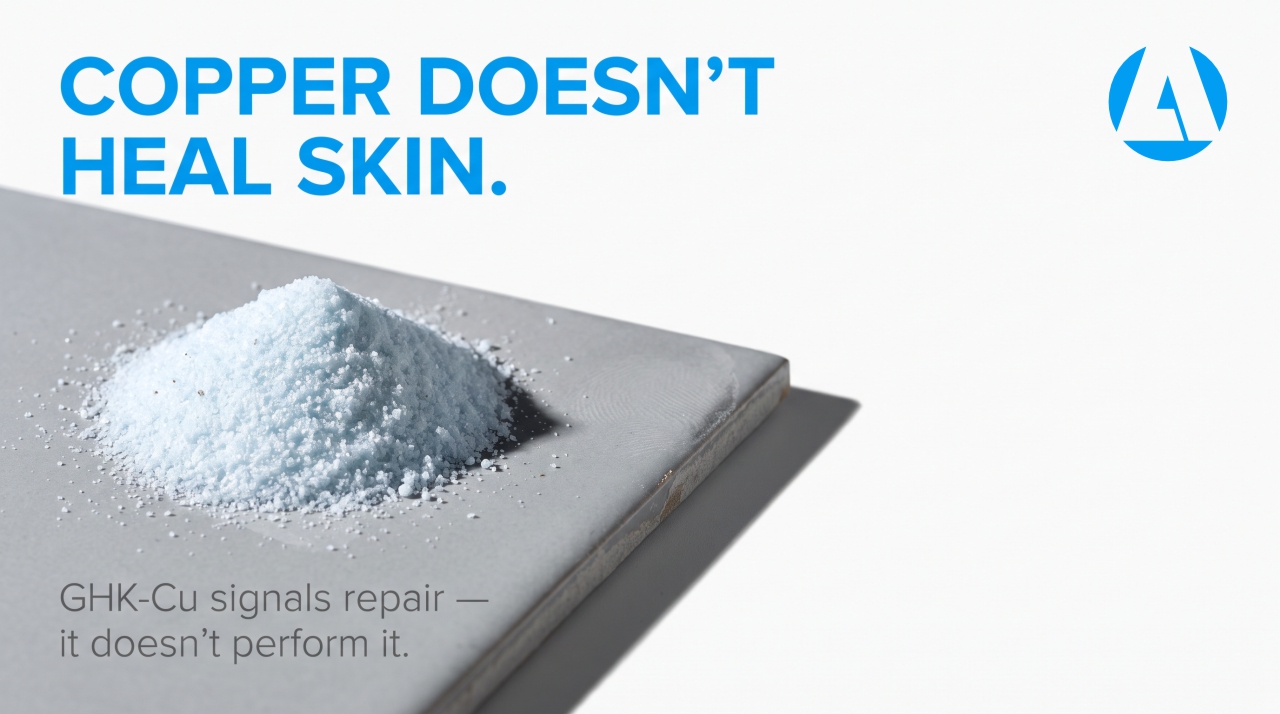
It's worth being precise here: while the mechanistic research is genuinely interesting, cosmetic-grade copper peptide products are formulated at concentrations and delivery systems designed for topical skin support, not wound treatment. The clinical wound-healing data does not directly translate to claims about serums and moisturizers.
Potential Benefits
Based on available research and formulation experience, copper peptides are commonly associated with:
- Supporting the skin's natural collagen and elastin production processes
- Contributing to a smoother, more resilient skin texture over consistent use
- Offering mild antioxidant-supportive properties
- Supporting the skin barrier when combined with appropriate emollients and humectants
- Complementing other actives like peptides, hyaluronic acid, and niacinamide in layered routines
It's important to frame these as supportive functions rather than guaranteed outcomes. Individual results vary based on formulation, concentration, skin type, and consistency of use.
Limitations and Considerations
Copper peptides are not without formulation challenges, and understanding these limitations is just as important as understanding the benefits.
Stability is sensitive. Copper ions can catalyze oxidation reactions, which means copper peptide formulations need to be carefully balanced with antioxidants and stabilizers to avoid degrading other actives in the same product, particularly vitamin C in its ascorbic acid form.
Compatibility with certain acids. Combining copper peptides with strong exfoliating acids (like high-percentage AHAs) in the same product, or layering them without spacing, can reduce efficacy or destabilize the formula. Many formulators recommend using copper peptides and vitamin C in separate steps of a routine, or in separate product lines, rather than combining them in a single leave-on formula.
Color and texture. Copper peptides can impart a slight blue or green tint to formulations depending on concentration, which needs to be accounted for in product development and packaging design.
Evidence is still developing. While GHK-Cu has one of the longer research histories among peptides, much of the human clinical data comes from smaller studies. Larger, well-controlled trials specific to cosmetic-grade formulations remain more limited compared to more established actives like retinoids.
Common Myths
Myth: More copper peptides always means better results. Reality: Peptide efficacy depends on the entire formulation, including delivery system, pH, and supporting ingredients, not concentration alone. Overly high concentrations can also increase the risk of formulation instability.
Myth: Copper peptides work the same as injectable or wound-care copper treatments. Reality: Topical cosmetic formulations are designed and dosed differently from clinical wound-care products. The mechanisms researched in wound healing do not automatically apply at cosmetic concentrations.
Myth: Copper peptides can replace sunscreen or retinoids for anti-aging routines. Reality: Copper peptides are typically positioned as a complementary ingredient within a broader routine, not a replacement for foundational actives with stronger clinical backing, such as daily SPF.
Practical Tips for Use
- Introduce copper peptide products gradually, especially when combined with other active ingredients
- Avoid layering copper peptides directly with ascorbic acid (vitamin C) in the same application; consider using them at different times of day or on alternating days
- Look for formulations that pair copper peptides with barrier-supportive ingredients like ceramides or panthenol
- Store copper peptide products away from direct light and heat to help preserve stability
- Patch test new formulations, as with any active ingredient, particularly for sensitive skin types
Formulation Best Practices for Brands
For brands developing copper peptide products, a few formulation principles matter:
- pH matters. GHK-Cu is generally more stable in a mildly acidic to neutral pH range; formulators need to balance this against other actives in the same product.
- Packaging matters. Airless pumps or opaque, UV-protective packaging help preserve peptide stability over shelf life.
- Supporting ingredients matter. Antioxidant systems and chelating agents can help protect both the copper peptide and other sensitive actives from oxidative degradation.
- Stability testing is essential. Given copper's reactivity, accelerated and real-time stability testing is particularly important before finalizing a formulation for market.
Acticon Life Sciences works with formulators to navigate exactly these kinds of stability and compatibility challenges when developing peptide-based skincare products, ensuring the final formulation performs as intended from first batch to last.
Frequently Asked Questions
What is GHK-Cu? GHK-Cu is a copper-bound tripeptide widely used in skincare formulations, studied for its potential role in supporting skin repair and collagen-related processes.
Are copper peptides safe for sensitive skin? Copper peptides are generally well tolerated, but as with any active ingredient, individual sensitivity varies. Patch testing is recommended, especially in new formulations.
Can I use copper peptides with retinol? Combining copper peptides with retinol is possible, but many formulators recommend alternating use or spacing application to reduce the chance of irritation or instability, depending on the specific product concentrations involved.
How long does it take to see results from copper peptides? Visible changes in skin texture and firmness, when they occur, typically develop gradually over consistent use across several weeks, consistent with how most collagen-supportive ingredients function.
Can copper peptides replace professional treatments? No. Copper peptides are a topical supportive ingredient and are not a substitute for professional dermatological treatments or medical advice.
Conclusion
Copper peptides represent one of the more scientifically grounded entries in the peptide category, with a research history that spans decades. Used thoughtfully and formulated correctly, they may offer a valuable supportive role in skin barrier and firmness-focused routines. As with most actives, the real value lies not in the ingredient alone, but in how well it's formulated, stabilized, and paired with the rest of a routine.
Looking for a manufacturing partner experienced in stability-sensitive peptide formulations? Acticon Life Sciences offers end-to-end product development and manufacturing solutions for skincare, cosmetics, pharmaceuticals, and nutraceuticals, backed by in-house R&D and rigorous quality testing.