
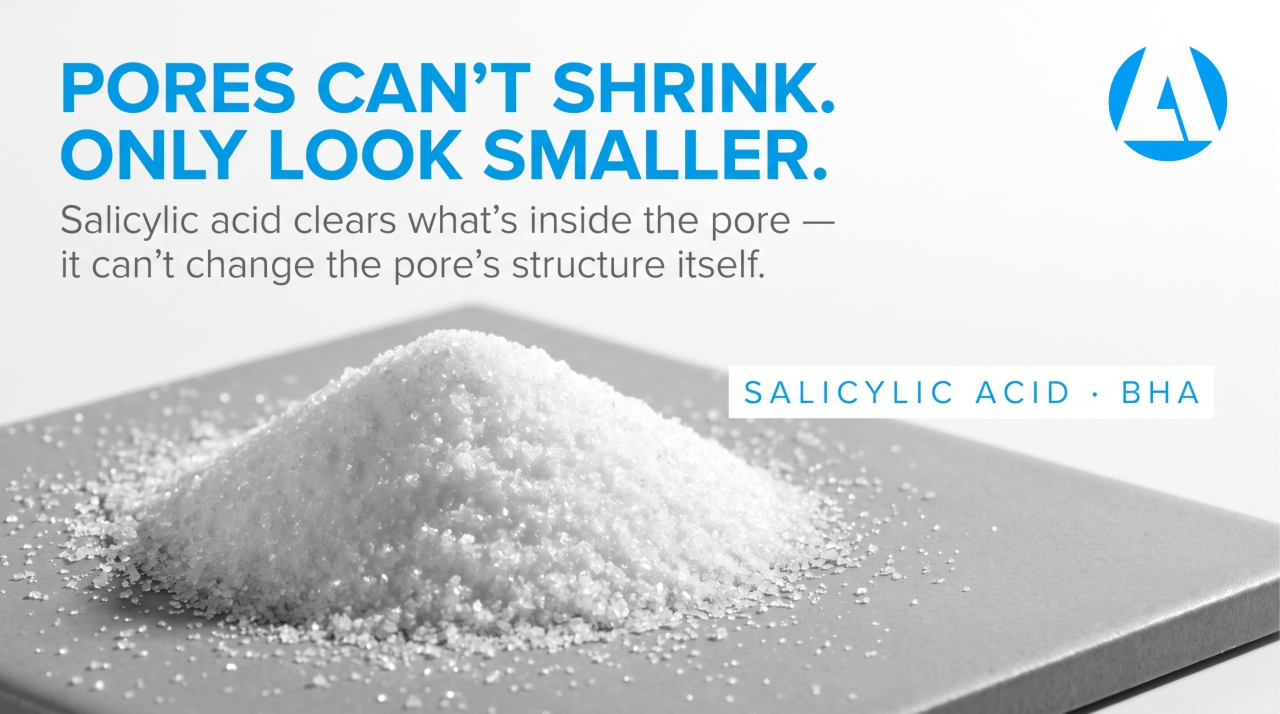
Can You Actually Shrink Your Pores? What Skincare Can and Can't Do
Walk into any skincare aisle and you'll find serums, toners, and masks promising to "shrink" or "minimize" your pores. It's one of the most searched skincare concerns out there. But here's the question worth asking before buying another pore-focused product: can skincare actually change the physical size of your pores, or is it doing something else entirely?
The honest answer is more nuanced than most product labels suggest.
Why This Topic Matters
Large pores are one of the most common skin concerns, especially for people with oily or combination skin. Understanding what's actually happening at the skin level helps you set realistic expectations and choose products that work with your skin's biology rather than against it. It also protects you from overspending on products that promise something skincare simply cannot deliver.
What Are Pores, Exactly?
Pores are the visible openings of hair follicles and sebaceous (oil) glands on the skin's surface. Every pore is connected to a gland that produces sebum, the skin's natural oil. Their size and visibility depend on several factors:
- Genetics, which largely determines how large your pores naturally are
- Sebum production, since oilier skin tends to have more visible pores
- Sun damage, which breaks down collagen and elastin around the pore, making it appear stretched
- Age, as skin loses elasticity over time, allowing pores to look larger
- Buildup of oil, dead skin cells, and debris, which can stretch the pore opening
Pores don't have muscles, so they can't physically open or close the way people often describe. What changes is how visible they appear.
The Scientific Explanation: Why Pores Can't Be "Shrunk"
Pore size is structurally determined by the size of the sebaceous gland attached to it. This is set largely by genetics and doesn't change based on topical products. What skincare can influence is everything around the pore: oil levels, dead skin cell buildup, and the surrounding skin texture.
When pores are clogged with oil and dead skin, they stretch and appear more prominent. When that buildup is cleared and skin texture is smoother, pores appear tighter and less noticeable, even though their actual structural size hasn't changed. This is why "pore minimizing" is a more accurate description than "pore shrinking."
Ingredients That Can Genuinely Help
Several well-studied ingredients can improve the appearance of pores by addressing what actually makes them look larger:
- Salicylic acid, a BHA that is oil-soluble and can penetrate into the pore lining, helping clear excess sebum and dead skin buildup
- Niacinamide, which may help regulate sebum production and support a more even skin texture over time
- Retinoids, including retinol, which support skin cell turnover and collagen production, potentially improving elasticity around the pore over consistent, long-term use
- Clay-based masks, which can absorb excess surface oil temporarily, giving pores a smoother, less visible appearance right after use
- Sunscreen, which protects collagen from UV-related breakdown, indirectly helping maintain the skin structure that keeps pores looking tighter over time
None of these ingredients change pore size permanently. Their value lies in consistent use and how well they're formulated together.
Common Myths About Pores
Myth: Cold water closes pores.
Pores don't have muscles to open or close. Cold water may temporarily reduce surface puffiness, but it doesn't change pore structure.
Myth: Pore strips shrink pores.
Pore strips remove surface debris from the pore opening, which can make it look temporarily cleaner, but this effect isn't permanent and overuse can irritate the surrounding skin.
Myth: You can close pores permanently.
Since pores are fixed anatomical structures, there's no product that permanently changes their size. Claims suggesting otherwise are not scientifically supported.
Myth: Only oily skin has visible pores.
While oil production plays a role, sun damage and reduced elasticity from aging can make pores more visible even in drier skin types.
Practical Tips for Minimizing Pore Appearance
- Cleanse consistently, but avoid over-washing, which can trigger more oil production
- Use a BHA like salicylic acid a few times a week if your skin tolerates it
- Introduce a retinoid gradually and always follow with sunscreen the next morning
- Choose lightweight, non-comedogenic moisturizers so pores aren't further clogged
- Be patient. Visible improvement in texture from actives like retinoids can take 8 to 12 weeks of consistent use, and individual results may vary depending on skin type and formulation
The Role of Formulation Quality
It's worth noting that two products with the same "active ingredient" can perform very differently depending on formulation. Factors like pH, ingredient concentration, delivery system, and packaging stability all affect how well an active ingredient actually reaches and works within the pore. This is one reason product performance can vary so much between brands, even when ingredient lists look similar. Companies like Acticon Life Sciences, which develop and manufacture skincare formulations, often emphasize that getting the science right at the formulation stage is what determines whether an ingredient can deliver on its intended function.
Frequently Asked Questions
Can pores grow back once they're "cleaned"?
Pores aren't removed or destroyed during cleansing, they're simply cleared of buildup. They can appear enlarged again if oil and debris reaccumulate.
Does drinking more water shrink pores?
Hydration supports overall skin health, but there's no direct evidence that water intake changes pore size.
Are pore-minimizing primers effective?
Some primers use silicone-based formulas that fill in the pore visually, creating a smoother look temporarily. This is a cosmetic effect, not a structural change.
Is it normal for pores to look larger with age?
Yes. As collagen and elastin naturally decline with age, the skin around pores loses support, making them appear more prominent.
Conclusion
Pores can't be permanently shrunk, but their appearance can absolutely be improved with the right ingredients and consistent care. Understanding this distinction helps set realistic expectations and avoid products that promise more than skincare can deliver. Focus on ingredients backed by research, like salicylic acid, niacinamide, and retinoids, and give your routine time to work.
Looking for a reliable manufacturing partner for skincare, cosmetics, pharmaceuticals, or nutraceuticals? Acticon Life Sciences offers end-to-end product development and manufacturing solutions focused on quality, compliance, and innovation.